
The Wandering Vagus Nerve (CN X) & HP-EVOO - Blog # 118

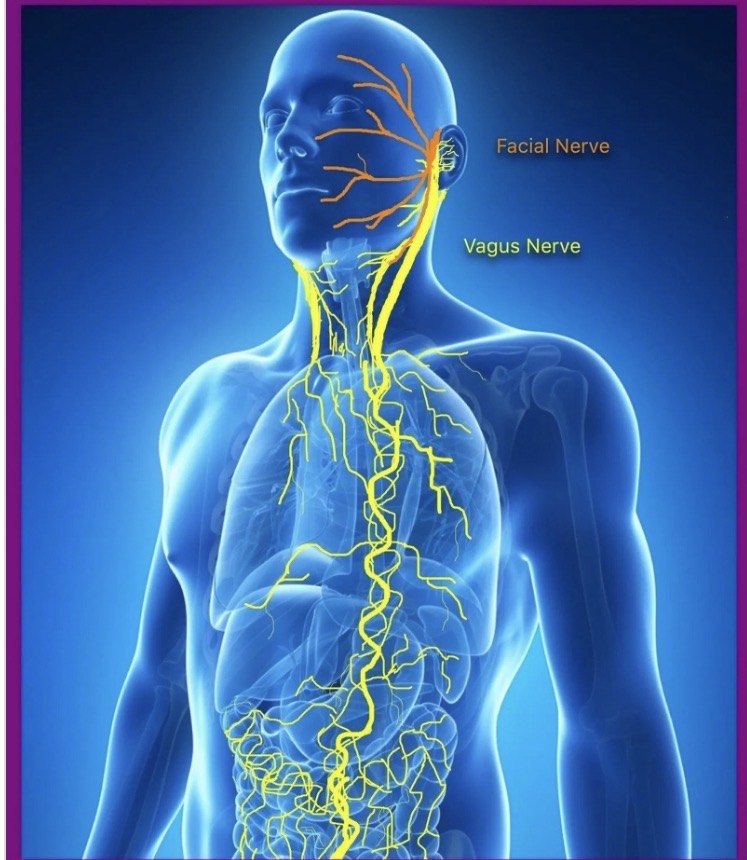
Hello Everyone! Welcome back to another Friday blog. Today I want to take a close look at the longest, and most complex of the 12 pairs of cranial nerves - the Vagus Nerve - CN X. In Latin, it means "wandering" and true to its name courses from the brainstem all the way down to the transverse mesocolon - sprouting branches and winding around to communicate with nearly every organ below the neck. "The vagus nerve functions as a multidimensional integrative system" with ~ 80% of the nerve fibers being afferent - sending information from the organs to the brain - while only 20% are efferent - information communicated from the brain to the organs. The right vagus is termed "nervus vagus dexter" while the left is "nervus vagus sinister." The nomenclature gives us a clue as to the different functions between the right and left as they exit the skull through the jugular foramen where they take completely separate journeys to accomplish the overall goals of this amazing cranial nerve. Let's delve in.
We all know the vagus nerve is our primary parasympathetic controller. However, it has sympathetic input as well. The vagus nerve is a mixed cranial nerve meaning it contains parasympathetic and sympathetic motor fibers as well as visceral and special sensory fibers. Rootlets originate from 4 separate nuclei in the medulla oblongata of the brainstem: including:
- the dorsal vagal motor nucleus - provides parasympathetic information to cardiac, pulmonary, esophageal muscles and gastrointestinal glands.
- nucleus ambiguus - provides motor control of most muscles in the pharnyx, larnyx, and some soft palate and tongue.
- spinal trigeminal nucleus - sensory information from the outer ear and tympanic membrane
- solitary nucleus - sensory impulses from carotid and aortic bodies
The vagal motor trigone (triangular bump of nerve roots) lies in the floor of the 4th ventricle directly over the dorsal vagal motor nucleus with some fibers from solitary tract and manages our autonomic body functions. These fibers join with other vagal fibers before exiting the skull. The location is optimal for communication with other structures and nerves from posterior sphenoid that work with the vagus nerve to achieve parasympathetic visceral functions. It is linked anatomically and functionally to the area postrema, the chemotactic center for toxins - and joins fibers within the dorsal vagal complex to participate in the vomiting network of the system.
The vagus is receiving information from the periphery to determine how to respond to environmental signals. For example, inflammatory signals from peripheral tissues activate afferent vagal nerve fibers relaying this information to the Hypothalamus. Interleukin (IL)-1 β, IL-6, and tumor necrosis factor alpha (TNF-α) and others can initiate fever. This activates release of ACTH (adrenocorticotropic) to release cortisol and induce fever after endotoxin exposure such as from a bacterial infection. A viral infection in the gut will trigger afferent signals to travel up the vagus nerve to the hypothalamus ending in the emetic center (solitary nucleus, area postrema, and dorsal motor nucleus) - then, "efferent vagal signaling from the vomiting center stimulates a nerve-muscle vomiting reflex in the stomach" triggering vomiting. There are several visceral reflexes in this region including:
- vomiting - coordinates stomach contractions with esophageal relaxation to expel toxins
- baroreceptor - responds to high blood pressure by lowering cardiac output and heart rate
- gastrocolic and enterogastric - regulates gastric emptying, gut motility and speed of digestion in response to quantity of food consumed.
- vagovagal - adjusts muscle tone and gastric secretions in response to stretching or chemical irritation.
- Hering-Breuer - protects the lungs from over-inflating with forced inhalation
- oculocardiac - pressure applied to the eyeballs drops heart rate and blood pressure
There are 3 fiber types: A= highly myelinated with very low activation threshold. B = lightly myelinated with moderate activation threshold. C = unmyelinated with a high activation threshold. This gives us a clue as to the speed required for specific information exchange in different areas of the body as the vagus nerve provides ~ 75% of parasympathetic function in the body. Think of this as a sophisticated volume dial that can transmit and adjust between fast and slow signaling (polyvagal theory). Exiting the skull at the jugular foramen, the vagus nerve travels in the carotid sheath - strategically positioned between the internal carotid and jugular vein. It is "particularly well positioned to interface the immune and central nervous systems because it innervates the organs that are portals of entry or filters for pathogens and their products." The vagus has huge responsibilities in our wellbeing.
It is important to note how other cranial nerves communicate and coordinate with the vagus to accomplish the overall goal of enhancing the body's vortices to isotopically fractionate heavier molecules to traffic and eliminate misfolded proteins, toxins and deuterium through the stool. In the skull, it works closely with the trigeminal nerve to accomplish swallowing, facial-cardiac reflexes, airway protection, and brainstem nuclear cross-talk. We have areas in the head that allow CSF to drain back into the cardiovascular system to keep the brain clear of amyloid and tau proteins. When we chew/masticate for example, we are stimulating the piezoelectric (tiny electrical charges) properties of bone at the jaw enhancing elimination at Meckel's cave. A 2025 study elucidated that "a CSF tracer penetrates the trigeminal, facial, and vestibulocochlear nerves in a peripheral direction, providing evidence that efflux of CSF occurs along cranial nerves in humans...in vivo evidence for CSF efflux along cranial nerves to the periphery has not been demonstrated before." Cranial nerves therefore play a significant role in CSF efflux and preventing Alzheimer's and dementia. Understanding how important chewing is and how our diet has shifted to a highly processed form that does not require the intense chewing of hard foods, we can see the consequential narrowing of facial and jaw structurers in modern humans.
The right and left vagus nerves take completely separate journeys once leaving the head. Let's explore the asymmetric innervation of the right and left vagus nerves
The right vagus nerve - leaves the jugular foramen (at the base of the skull) and descends vertically in the carotid sheath traveling alongside CN IX (glossopharyngeal) and CN XI (accessory). Having close contact with the carotid artery, jugular vein and these cranial nerves allow complex functions in the mouth and throat such as swallowing, taste perception and gag reflex while monitoring signals from blood vessels regarding oxygen levels and blood pressure for optimizing homeostasis.
- courses anterior to the right subclavian artery
- gives off a branch - the right recurrent laryngeal n. - which loops underneath the subclavian artery before ascending to innervate the larynx.
- continues to descend posterior to the root/hilum of right lung
- enters the chest through the tracheoesophageal groove and contributes fibers to the esophagus
- innervates the atria of the heart
- innervates the SA (sinoatrial) node of the heart - the primary pacemaker
- forms posterior vagal trunk
- innervates the gut organs - the posterior stomach, celiac plexus hitchhiking along arteries to supply multiple organs and midgut, spleen and pancreas - regulating digestive enzymes. and insulin secretion, small intestine (duodenum, jejunum, ileum), large intestine (cecum, appendix, ascending colon to splenic flexure), kidneys and adrenal glands.
The left vagus nerve - leaves the jugular foramen and descends vertically in the carotid sheath traveling alongside CN IX - glossopharyngeal, and XI - accessory

- courses between the common carotid and left subclavian arteries before crossing the anterior left side of the aortic arch
- gives off a branch - the left recurrent laryngeal nerve - loops underneath the arch (ligamentum arteriosum) before ascending to the larynx. Why would we be designed this way? Every time our heart beats, the left vagus nerve is tugged on. Hmm...this will prove to be strategically crucial to our physiology.
- innervates the AV (atrial ventricular node) of the heart - catches the signal from the SA node and delays the signal for a fraction of a second allowing the two chambers to empty before the bottom squeezes
- continues to descend posterior to the root/hilum of the left lung contributing to cardiac and pulmonary plexuses - this gives strategic positioning to coordinate information from the lungs and heart to the brain.
- continues to descend along the esophagus giving off multiple esophageal fibers
- forms the anterior vagal trunk diving through the diaphragm and into the abdomen to innervate the anterior stomach, liver, gallbladder and pylorus (regulating gastric emptying).
Okay, now that we can see the asymmetry and coordinated signaling between the right and left vagus nerves, we can see just how important the vagus is in managing our physiology and how things can go very wrong if we have damage or insult to this nerve. Without this asymmetry, the sophisticated design of the 4-chambered heart could not wring itself out with each heartbeat or vortex the blood to supply oxygen to allow higher level brain function and speech. It is crucial to note that unlike most other tissues in the body, nerves do not have a direct blood supply. They must have usable oxygen in the microenvironment for exchange with metabolic waste.
What happens if we become hypoxic/pseudohypoxic due to oxygen being in the singlet state (diamagnetic) versus the triplet ground state (paramagnetic)?
-
Triplet oxygen has two unpaired electrons with parallel spins (total spin S = 1). This results in a net magnetic moment, making it paramagnetic — it is attracted to magnetic fields and can be detected by electron spin resonance (ESR) meta-synthesis.
-
Singlet oxygen has all electrons paired (total spin S = 0), so the magnetic moments cancel out. This makes it diamagnetic — it is weakly repelled by magnetic fields and does not produce an ESR signal biologyinsights.com.
Triplet oxygen (³O₂) obeys a quantum rule of "spin restriction" - and has 2 unpaired electrons spinning in the same direction making it very stable preventing unwanted interactions with biological molecules. We don't want our tissues oxidized!! Singlet oxygen (¹O₂) is highly excited, reactive and destructive with its 2 outer electrons spinning in opposite directions. This creates ROS (reactive oxygen species) that steal electrons from neighboring molecules and tissues. "This significant difference in reactivity has profound implications in biology and medicine, particularly in the context of oxidative stress, cellular signaling, and therapeutic interventions like photodynamic therapy (PDT)." Hypoxia/pseudohypoxia induces potent proinflammatory cytokines, upregulates growth factors that drive abnormal blood vessel growth (in cancer) and interstitial fibrosis. This is inflammation. We begin to get disease. The vagus nerve transmits this information to the brain - remember that 80% of vagal transmission is from the organs to the brain.
What happens in the chemotactic region if you have a high deuterium load in your CSF (cerebrospinal fluid) - and that 'heavy water' hits the vagal motor trigone? Deuterium is a heavy isotope of hydrogen with double the mass and weight. Deuterium causes the blood to be more viscous - think syrup vs water. If it becomes too viscous it doesn't move through the brain like it should. Understanding that the KIE (kinetic isotope effect) of deuterium is 6-10 one must realize the viscosity of the CSF slows or halts the vortex in the brain making it impossible to remove waste and toxins. This can result in ventricle enlargement and increased pressure, impairing brain function and can result in severe neurological consequences and even death. Could this have been the reason a young sophomore baseball player from Ohio's Wooster High School recently died? He appeared perfectly healthy and played well in the game. However, he became very ill and began vomiting a few hours after the game and was taken to hospital where tragically he was pronounced brain dead with no cause of death given.
The vagus nerve is a primary stimulator of deuterium elimination from the body. We use gravity to coax deuterium down to the colon via the vagus. Every time your heart beats, it tugs on the L vagus nerve - pulling the heavy isotopes down and out of the brain. There are no valves, so imagine how it can go back up to the brain if we are not eliminating daily. Maybe dementia is a brain overloaded with deuterium and other heavy isotopes - there is often a gastrointestinal connection seen in dementia patients. Its asymmetric innervation makes it the mover and shaker, coordinating with the gut and pancreas to produce ~2L of bicarbonate (HCO3-) to neutralize acidic chyme coming into the small intestine and eliminate deuterium in the stool. You are eliminating deuterium effectively if you have a Bristol 4. "A healthy, vagally-driven system uses this 2L loop to fractionate and "flush" the heavy trash (2H) out of the GI tract, resulting in a perfect Bristol Stool Type 4. This is where the KIE receipt should be in your life, not in your brain!!!"
We also have mechanisms to prevent heavier molecules from entering the brain such as the BBB (blood brain barrier) which fractionates heavier isotopes. CSF is formed from a filtrate of blood - which is 93% water - at the choroid plexus that further fractionates heavy isotopes from the ISF (interstitial fluid). CSF flows from the 3rd ventricle through a funnel-like opening called the aqueduct of Sylvius into the 4th ventricle. This funnel induces the Venturi effect - think of decanting wine - it causes a drop in pressure and increase in fluid speed. Heavier molecules are forced down and centrifuged out to the outer edges while light hydrogen hits the vagal motor trigone. If the CSF is viscous, slow moving and unable to spin fast to push heavy deuterium to the outer edge, heavy deuterium hits the vagal motor trigone. This could instantly induce vomiting if you have a high deuterium load - but you also could experience less severe symptoms including headache, brain fog or balance/ataxia problems. Think of what can happen in absence of gravity - recently we have had astronauts on the ISS (international space station) experience some strange phenomena. In January of 2026 Mike Fincke lost his ability to speak for 20 minutes. In the first-ever emergency medical evacuation, they brought him down thinking he had suffered a stroke, but it wasn't a stroke. Christina Koch also experienced post-flight ataxia-like symptoms that NASA can only explain touting microgravity adjustment. Could they have experienced a 'traffic jam' in different areas of their brain? We know the loss of gravity has profound effects on the body - as astronauts lose up to 30% of muscle mass - even while exercising - experience tinnitus and other issues after a relatively short stent in space - and they arguably are the most fit people on our planet.
Glymphatic clearance of the brain occurs during sleep and removes deuterium, misfolded proteins, amyloid proteins, heavy metals and other waste from the brain and is "most active during non-rapid eye movement (NREM) sleep, particularly N3 stage." The brain shifts in stages between REM and NREM. Understanding the connection of the eyes to the vagus, one can realize the rapid eyes moving back and forth physically moves heavier isotopes to the outer edges - then NREM removes them. We have 3 primary outflow openings that route the CSF from the 4th ventricle into the subarachnoid space - 2 lateral drainage holes called the foramen of Luschka that anatomically functions as a one-way valve - where we are designed to push out heavier isotopes, such as deuterium. The foramen of Magendie is a single centrally positioned opening with NO valvular function - that drains CSF and light hydrogen straight back to the cisterna magna. The CSF vortex during the day spins in a right-hand downward-driven direction, but reverses direction during sleep spinning counterclockwise in a left-handed and upward-driven direction. Robert O. Becker elucidated this in the 1960s and 1970s. We have all memorized the "screw-home mechanism" rule phrase "righty-tighty, lefty-loosey" - this applies to biophysics as well - a concept known as chirality. An example of this spin can be seen in the heart. "The left ventricle (LV) has a unique pattern of hemodynamic filling. During diastole, a rotational body or ring of fluid known as a vortex is formed due to the chiral geometry of the heart."
Okay - so what can we do to optimize the vagus nerve, lower oxidative stress, activate rest and digest, lower the deuterium/heavy isotope load on our vortices and protect the vagus nerve - that has a hand in nearly every facet of our health?
-
Red/IR sunlight -
- prevents triplet ground state oxygen from becoming singlet. Triplet ground state oxygen creates cellular coherence, whereas singlet oxygen creates inflammation and incoherence. Isolated blue light from artificial lighting and technology screens flips triplet state oxygen to the highly reactive singlet state. This is an excellent reason to see the sunrise every morning. The highest quality red light is at sunrise - but there is always red light in nature. In fact, nearly 55% of sunlight that reaches earth is invisible IR-FIR, 43% is in the visible IR-A spectrum. We just need to get outside to get this nutrient - it is FREE. A single human cell produces and consumes up to 100 million ATP per second. A 72 kg man must make >85 kg ATP daily. We must make more ATP than we weigh - we get 1/3 of the electrons from food, 2/3 from sunlight. Lack of sunlight literally MAKES US EAT MORE TO MAKE UP THE ELECTRON DIFFERENCE - we get fat
- activates/renovates heme proteins such as hemoglobin as well as mitochondrial cytochromes to use oxygen to make ATP, including CCO (cytochrome C oxidase) to make biological (deuterium-depleted) water
- IR-A light allows CCO to trigger ATP production from electrons that do not come from food.
- preconditions the skin and eyes for UV light to come.
- Penetrates through your body into bones and other tissues to optimize function
-
Midday sunlight - full-spectrum sunlight that includes UV light directly into eyes and onto skin. UV light is ~5-8% of the spectrum only at certain times of day primarily in summer. In higher latitudes UV can even be completely absent at certain times of the year. UV light is a sign of environmental energy abundance, growing plants, and fertility. If we don't get UV light - because we are not going outside or we are wearing sunglasses and sunscreen that blocks UV, your body is in a frugal, thrifty, energy-saving "winter" mode. Your body perceives it as eternal winter. Your food will be preferentially stored as fat rather than burned for energy - to save your life. This is a big problem if you are trying to lose weight. Change your environment. When we get UV light it is a signal to the system that there is an abundance of bioenergy available from the environment - we don't even need to eat as much because we have energy coming in from our environment.
- UV light stimulates POMC gene that cleaves into 10 peptides including beta endorphin and alpha-MSH to allow the production of melanin, decrease appetite and increase energy expenditure, improve dopamine status and critical thinking as well as reducing compulsive behaviors. It takes us out of the feeling that we are constantly looking for something to make us feel whole. New evidence by Dr. Arturo Solis Herrera shows the ability of human photosynthesis - highly similar to plants splitting water - where we use melanin to "absorb photonic energy, dissipating it in a unique manner: splitting the water molecule." So, UV light allows us to harness the power of the sun to create free energy. However, making melanin requires triplet ground state oxygen. Get tan - build your solar callus. If you can't get tan, you likely have high levels of singlet state oxygen, low vitamin D, higher blood pressure, and you need more sun and more grounding while avoiding isolated blue light and non-native EMFs. Remember that isolated blue light DESTROYS all photoreceptors.
- UV light also allows the release of NO (nitric oxide) to dilate blood vessels and lower blood pressure. FYI - POMC lines your arteries! Neural crest cells migrate along elastin and fibrillin collagen fibers that line arteries. Lack of sunlight is the actual underlying cause of hypertension. You can do a test on yourself if you have high blood pressure - get 30-45 min of UV sun exposure then re-check your BP. I have seen it lower a BP of >193/91 to 131/65 after 45 minutes in a 91-year-old female.
- UV light also allows us to make vitamin D from cholesterol in the skin. We are designed to bank our vitamin D stores all summer to be used through the winter when we don't get much UV. Build your solar callus. Bank your vitamin D. Get your bloodwork levels 60-100 through sunlight - not supplements. When we realize ALL THE BENEFITS of UV light and realize ALL THE DISEASE PROCESSES we are fighting - it begins to make sense why we are told to wear sunglasses and "protect our skin from UV" by slathering sunscreen. IT KEEPS US SICK.
- Grounding - we increase the magnetic force when we ground - and gain free electrons from the earth while discharging positive charges into the earth. We have eccrine sweat glands on our hands and feet to allow connection to the earth. The more electronegative we are, the better our vortices spin and the healthier we are. Get all leather shoes, go barefoot in the grass, walk in the ocean along the beach, ground close to volcanic regions. Get an EMF reader. Check your sleep area and areas inside your home that have high non-native EMF readings. Get a grounding sheet. Wear copper. Wear neodymium (rare earth) magnets to help provide a static magnetism to counter loss of magnetism on the planet.
- 3% saline - the brain and nervous system rely on sodium. This increases the voltage in the IMM (inner mitochondrial membrane) and restores the optimal 160 dielectric of the blood required to spin our vortices, lowers intracranial pressure and restores function. "Notably, patients with the highest blood viscosity were those requiring oxygen supplementation to maintain arterial saturation within the normal range. Lamarre reported that patients with sickle cell disease and elevated blood viscosity had more frequent episodes of vaso-occlusive crises when compared to those with lower blood viscosity." We also need many other minerals. Use a good sea salt with 80+ trace minerals (ideally with rare earth elements) ~ 1 TBS in 20 ounces of water - consume over the course of the day. Personally, I take healthy sea salt doses multiple times per day and follow with water as I don't enjoy drinking salty water. This can drastically improve your energy level, ability to move water all over the body. FYI - centralized Rockefeller medicine will tell you to avoid salt with cardiovascular disease. Nothing is further from the truth. In fact, think about one of the first things they do to 'save your life' in crisis is give you an IV with saline - THEY GIVE YOU >3,500mg (9 grams) of sodium!
- Cold Thermogenesis - Powerfully activates the vagus nerve, increases mitochondrial function and UPE generation in the UVC range - crucial for leptin and other hormones and proteins activated in this range that even the sun cannot provide. If you live at high latitudes - as in Scandinavian countries - you may have very little to no UV light. These people have for a long time realized the benefits of sauna and cold plunge to stay healthy.
- Vago-pancreatic reflex - "The vagus nerve is a major parasympathetic efferent pathway that innervates the pancreas. When food is anticipated (via sight, smell, taste, or chewing), vagal stimulation triggers acetylcholine release from vagal nerve endings in the pancreas." This involves the bicarbonate (HCO3-) loop where the pancreas secretes bicarbonate to neutralize the chyme coming into the small intestine from the stomach. "During the cephalic phase of gastric acid secretion, vagally mediated synchronous stimulation of bicarbonate provides protection against the acid." When we see sunrise, ground and eat breakfast we isotopically load deuterium into the stool. Avoid constipation as this allows deuterium to be reabsorbed and follow the vagus nerve back to the brain. Consume plenty of pasture-raised eggs for choline and DHA - be aware that the yolk is deuterium-depleted while the deuterium is loaded into the egg white. The 'low-fat' nonsense we were told has done horrible things to our brain and physiology. Make a smoothie with egg yolks or add extra yolks to your omelet - choline is in the yolk.
- Fish and seafood - consume DHA in the proper form. It comes in sn-1, sn-2 and sn-3 forms. Fish and seafood are enriched in sn-2, which is what our body needs. Plant sources are enriched in sn-1 and sn-3. Nearly 60% of the brain by weight is fat - and of that fat DHA makes up > 90%. We use this for high-speed transmission of information. The American diet is tragically low. The ideal omega 6:3 ratio is ~1-3:1 and most people are ~20:1. Is it really surprising that we have so much mental health and neurodegenerative issues? Eat wild if possible. Farmed fish are what they eat and are low in omega 3s and high in omega 6. Grab cans of sardines, herring, mackerel, salmon and anchovy. Eat shrimp, caviar, oysters and other seafood.
- Eat a low deuterium diet - avoid high deuterium foods - seed oils are loaded with deuterium - as are all highly processed foods and even supplements. The new head coach of the Tennessee Titans, Robert Saleh has banned ALL SEED OILS from the team's training facility for example. The lowest deuterium foods are animal proteins, animal fats, EVOO and MCT oil. All grains, roots, fruits, coconut water and even milk are high in deuterium, while the leafy green leaves are low.
- Drink carbonated mineral water - between meals -not with - as it is alkaline. This helps to improve the dielectric of blood and vortices spin. Russian cosmonauts have used this since the late 1970s in their space program after several cosmonauts died in space. When you get on an airplane, drink carbonated water - avoid eating - wear copper and neodymium rare earth magnets to protect your vortices. You also can put a bare foot on the metal bar that connects the seat in front of you to the plane. The airplane must be grounded. This bar allows you to ground as well.
- Prioritize sleep - optimize circadian rhythm. Take a hot shower and cold plunge to drop core temperature before sleep. See sunrise to set your master clock - the SCN (suprachiasmatic nucleus). The highly concentrated red is optimizing your mitochondria while the blue light tells your brain what time it is. Get frequent sun exposures during the day to keep your circadian rhythm intact. Avoid any light after dark, but especially blue light. Use screen protectors, blue-light blocking glasses, protective clothing while indoors. Go to bed early.
-
Stimulate the vagus nerve - there are multiple ways. Here are a few-
- rubbing your eyes stimulates the opthalmic branch of the trigeminal nerve that connects to the vagus activating the oculocardiac reflex. This lowers blood pressure, enhances tear production and flushes deuterium out.
- Slow deep nasal breathing enhances oxygenation and stimulates vagus
- chew mastic gum - this stimulates deuterium-depletion through Meckel's cave due to the piezoelectric property of bone and collagen.
- cold plunge is a powerful stimulator of the vagus and enhances blood flow to the brain - start slow 1-3 minutes at 70-80-degree water and work to tolerate 30+ minutes ~ 55-degree water.
- Sit in front of a strong pool jet and allow it to hit the thoracic spine.
- Humming - loud with mouth closed - this vibrates the voice box providing stimulation to the vagus nerve.
- Singling stimulates the vagus
- Gargling - you can gargle plain water or salt water
- Put castor oil in your belly button - castor oil has chirality similar to melanin. We have ~ 70,000 vagal nerve endings in this region.
- tuning forks
- massage - get a massage or give yourself a foot massage
- listen to music
- Exercise - particularly long walks, yoga, cycling
- cover ears with palms of hands creating suction. Tap the back of the head with fingertips for several seconds to relieve tinnitus. Repeat several times per day.
- HRV (heart rate variability) - this is a great tool to check the vortex in the heart. The higher and more chaotic, the healthier you are. This is also associated with longevity.
-
HP-EVOO (high polyphenol extra virgin olive oil) - Oleic acid makes up ~ 30-40% of the myelin in the peripheral nervous system and 20% of the myelin in the central nervous system. There are >30 polyphenols identified in HP-EVOO. "Regular consumption of EVOO is linked to a reduced risk of various chronic conditions, including CVD and cerebrovascular diseases, type 2 diabetes mellitus (T2DM), metabolic syndrome (MetS), cognitive decline, and certain cancers such as breast and colorectal." Polyphenols in EVOO protect and prevent damage to neurological tissues including the vagus nerve. Here are 3 powerful polyphenols and their roles.
- Oleuropein (OLE) - OLE is neuroprotective against β-amyloid and H2O2 (hydrogen peroxide) toxicity, a powerful antioxidant that protects mitochondria and prevents neurodegeneration. Oleuropein protects melanin from degradation by enhancing melanocyte dendricity and export to keratinocytes, reduces oxidation via antioxidant activity and supports melanocyte survival and function under oxidative stress.
- Oleocanthal - the pleiotropic properties and activity of this polyphenol lowers oxidative stress, counters inflammatory cascades and protects neurological as well as digestive function. "Oleocanthal inhibits the production of pro‑inflammatory cytokines and reduces the expression of inflammatory genes in activated microglia (BV‑2 cells). It also counteracts oxidative stress induced by lipopolysaccharide (LPS), a common microglial activator. Molecular docking suggests oleocanthal may bind to CD14 and MD‑2, components of the TLR4 complex, potentially interfering with TLR4 signaling and dampening the inflammatory cascade."
- Hydroxytyrosol - "The anti-inflammatory activity of HT has been previously tested on macrophage cell lines, with the TLR-4 ligand lipopolysaccharide (LPS) as a stimulating agent, and proved that HT diminished the secretion of cytokines induced by LPS, including IL-1α, IL-1β, IL-6, IL-12, and TNF-α, as well as chemokines, such as C-X-C motif chemokine 10 (CXCL10/IP-10) and monocyte chemoattractant protein 1 (MCP-1/CCL2), through a mechanism non-dependent on the NF-κB signaling pathway. Another recent study has proved that HT in LPS-treated RAW264.7 cells modulates oxidative stress by the involvement of nuclear factor erythroid 2-related factor 2 (Nrf2)."
- "While EVOO contains over 30 polyphenolic compounds, hydroxytyrosol, tyrosol, oleuropein, oleacein, and oleocanthal are the most notable for exhibiting chirality" - you can use this internally and externally to enhance the function of the vagus nerve - and the entire nervous system."
- HP-EVOO - multiple polyphenols enhance dendritic lengthening and complexity, melanocyte production, function, as well as protecting melanin from degradation. Alzheimer's, chronic stress and epilepsy are associated with dendritic retraction - shorter and less complex.
So, until next time my friends…Drink, Drizzle, Digest HP-EVOO at least 4T raw daily, - use more for cooking and drizzling onto your food - eat the rainbow of local organic or wild-sourced animals and plants - eat according to what is growing at your latitude and location in season - eat wild-caught, pasture-raised, grass-fed - get early morning sunrise light and plenty of sunshine during the day, sleep in the dark, get your trace minerals and electrolytes with good sea salt - Celtic is hand-harvested and Himalayan was formed before plastics - eat foods high in lutein - drink plenty of filtered water. consume digestible and indigestible fiber for your gut microbes - adaptogens (such as mushrooms) and methylation donors (kale, beets, spinach, cruciferous, lion’s mane…), marjoram, rosemary, oregano, parsley and other herbs to detox, enhance overall health and reverse aging and disease - exercise your body and mind - ground barefoot to gain as many electrons as possible, add a few minutes of mindful meditation and breathing exercises to your day to combat stress - take a hot Epsom salt bath and follow with a cold shower/cold plunge - remove EMF (electromagnetic frequency) devices and blue light - use IR (infrared) from incandescent lighting, non-toxic candle or light a fire to enhance sleep and...turn off the light!! #HP-EVOO
This blog is intended for informational purposes only. Discuss strategies with your Healthcare Practitioner.